Standing Bear High School students focused their attention on sports gambling this spring by viewing the topic through the lenses of personal finance, economics and human behavior.
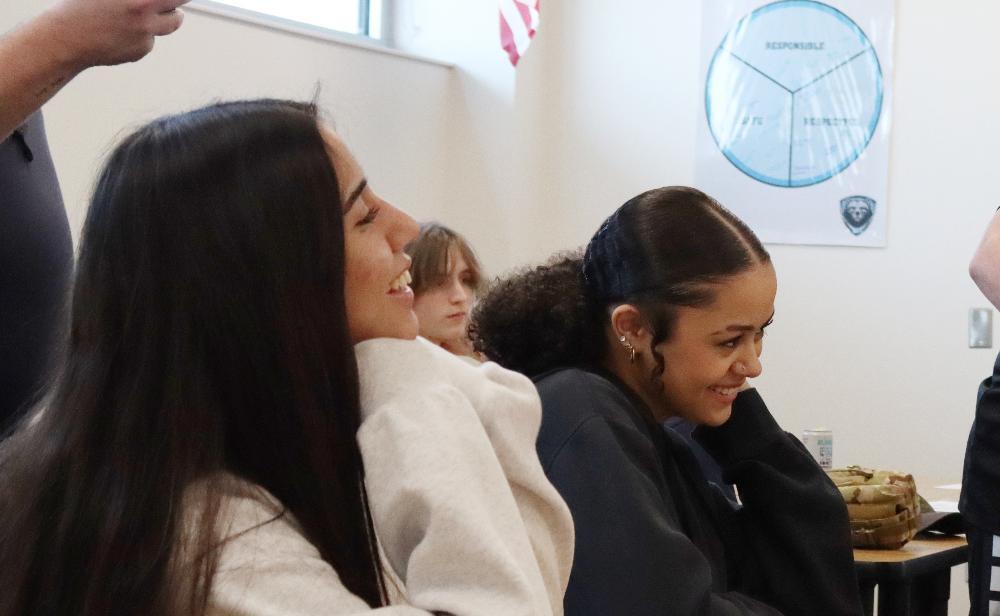
Dozens of Grizzlies took part in an interactive lesson called “Beyond the Bet: The Economics of Gambling” in their World of Business classes. Nebraska Council on Economic Education (NCEE) Associate Director Matt Pierson spent 45 minutes teaching them about the social and financial impacts of sports gambling, the probability of making successful bets and how the activity affects human decisions.
Standing Bear student Kate said she learned a lot from Pierson’s presentation.
“I really liked the lesson,” Kate said. “I thought it was cool how he brought in interactive things that we could do, and I thought it really showed how there’s so much into gambling.”
Classmate Payton said the lesson helped him become more aware of sports gambling.
“Sometimes it can be good and sometimes it can be bad. It’s not always the same,” Payton said. “It just depends on who the person is.”
Pierson and NCEE President Jennifer Davidson spent approximately one year developing the three-lesson unit, which has received national acclaim for its evenhanded and in-depth approach to the topic. The free lessons are accessible to thousands of teachers across the country under the education section of the Federal Reserve Bank of St. Louis website.
Pierson said introducing students to concepts like risk, incentive, and opportunity has become more important with the increased number of gambling websites and businesses available to consumers.
“The more I talk to high school students, I’ll just ask them, ‘Hey, are you gambling?’ And once they realize that I’m not here to turn them into any authority or anything like that, usually a good percentage of them have done some sort of activity that falls under gambling,” Pierson said.
One of the lesson’s main goals is to teach students the mathematical reasons why gambling is unpredictable. Pierson asked Standing Bear volunteers to complete five sports-themed activities in front of the class. Kate tried to kick as many small wads of paper as she could through the legs of a chair, which mimicked soccer, and Payton played a baseball game that involved hitting crushed pieces of paper above a line on the wall.
Kate said it also gave her a firsthand perspective of how sports gambling can potentially affect collegiate and professional athletes.
“I definitely heard people shouting at me to stop and telling me to do one more and stuff,” Kate said. “Obviously, I was in a very low-pressure situation, but even that kind of affected me a little bit.”
Pierson said he has enjoyed helping high school students view sports gambling through more-educated lenses in their business, finance and human growth classes.
“With March Madness going on and just being in the middle of that, sports betting is obviously going to be a huge topic for people,” Pierson said.
Visit the Nebraska Business Focus Program at Standing Bear High School webpage at business.lps.org to learn more about this learning opportunity.
Do you have a story idea? Share it with the LPS Communications Team by filling out this form!